
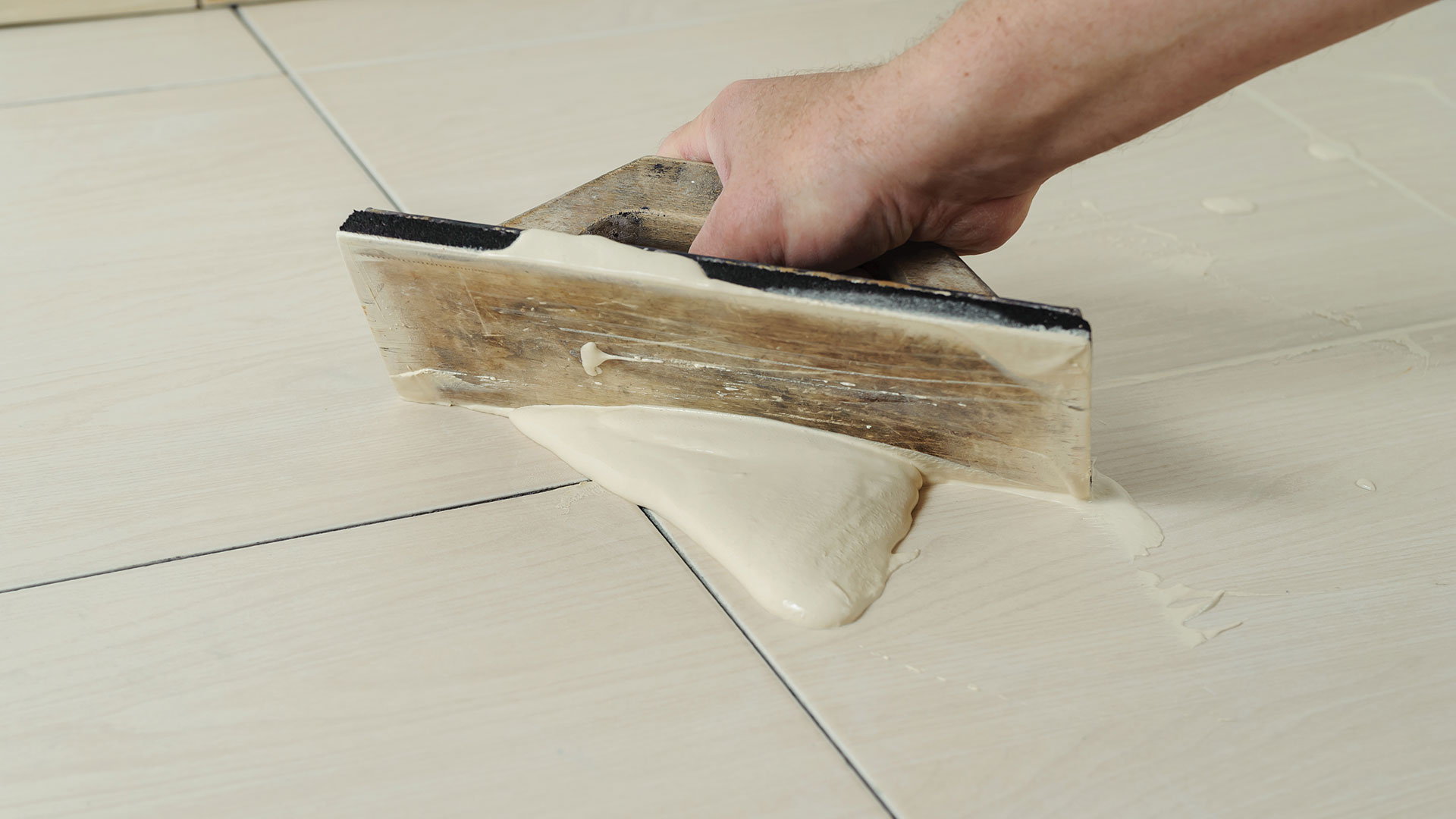
Epoxy grout is better for kitchens, bathrooms and other wet areas because it does not absorb water and resists stains. Cement grout is better for dry rooms and tight budgets because it costs less and is easier to apply. Many Indian homes use epoxy in wet areas and cement grout in bedrooms and living rooms.
Grout fills the joints between tiles, while tile adhesive fixes the tiles to the surface. If you are new to this material, start with our guide on what tile grout is.
Epoxy Grout vs Cement Grout at a Glance
| Point | Epoxy grout | Cement grout |
|---|---|---|
| Made from | Epoxy resin, hardener and filler | Cement, fine aggregates, pigment and additives |
| Water | Does not absorb water | Porous and absorbs water |
| Stains | Spills wipe off the surface | Can stain and darken |
| Mould | Resists mould growth | Can develop mould in damp joints |
| Sealing | Not needed | Recommended |
| Material cost | Several times higher | Lower |
| Application | Sets fast and needs a skilled tiler | Easier and more forgiving |
| Cleaning during work | Wipe promptly, as hardened residue is hard to remove | Needs a timely wipe |
Where to Use Each Grout
| Area | Better choice | Reason |
|---|---|---|
| Kitchen walls and floor | Epoxy | Oil, turmeric and water reach the joints daily |
| Bathroom and shower | Epoxy | Joints stay wet for long hours |
| Around a kitchen sink | Epoxy | Constant splashing and cleaning |
| Restaurant or hospital floor | Epoxy | Frequent washing and hygiene needs |
| Balcony or terrace | Check the product rating | Some epoxy grouts can yellow in direct sun |
| Bedroom or living room | Cement | Dry area with lower stain risk |
| Dry feature wall | Cement | No regular water contact |
Our article on epoxy grout for bathrooms and kitchens covers these two areas in more detail.
Limits of Epoxy Grout
- Higher cost: Both the material and the labour cost more than cement grout.
- Short working time: It sets quickly after mixing, so tilers work in small batches. Check the working time on the pack.
- Exact mixing: Resin and hardener must be mixed in the stated ratio, or the batch can fail.
- Residue on tiles: Any film left on the tile face becomes hard to remove once it sets.
- Porous tiles: Epoxy can stain unglazed or porous surfaces, so test a small area first.
- Handling: It has a strong smell during application. Keep the room ventilated and wear gloves.
Limits of Cement Grout
- Absorbs water: Moisture and dirt can enter the joint and change its colour.
- Needs sealing: A sealer improves stain resistance and may need to be applied again. Follow the product instructions.
- Wear over time: It can crack or wash out in areas with heavy water use.
How to Read the Grout Label
The international standard ISO 13007 classifies tile grouts by type. These codes tell you what the product is meant to do.
| Code | Meaning |
|---|---|
| CG1 | Normal cement grout |
| CG2 | Cement grout with improved characteristics |
| RG | Reaction resin grout, which includes epoxy grout |
| A | High abrasion resistance |
| W | Reduced water absorption |
| F | Fast-setting |
Grout Around a Kitchen Sink
The joints around a sink face water, soap and food stains every day. Epoxy grout suits this area better, and the work should be planned along with the sink fitting. See our modular kitchen sink installation guide, and check our SS kitchen sinks and quartz kitchen sinks if you are planning a new kitchen.
Grout Is Not a Waterproofing Layer
Even epoxy grout only protects the joints. A bathroom or terrace still needs proper waterproofing below the tile layer.
Shortlist Your Grout
Our tile grout range has these products:
- Tile grout range
- Tiles grout
- Diamond tile grout
- Epoxy EXD 500
- EXD 11
- EXD 33
- EXD 55
- EXD 99
- Grout premix
Check the Eureka Sinks catalogue for the full range. As the manufacturer, we share price and availability on inquiry. Send your product, quantity and city through our inquiry form.
You can read about our company, visit the Eureka Sinks home page or contact our team for help with your project.
Frequently Asked Questions
Which grout is better for a bathroom, epoxy or cement?
Epoxy grout is better for a bathroom because it does not absorb water and resists stains and mould. Cement grout is porous, so damp joints can darken over time. Cement grout suits dry rooms better, where water contact is low and cost matters more.
Is epoxy grout waterproof?
Yes, epoxy grout is effectively waterproof at the joint because it does not absorb water. It does not waterproof the whole floor or wall, though. Bathrooms, terraces and other wet areas still need a proper waterproofing layer below the tiles.
Why is epoxy grout more expensive than cement grout?
Epoxy grout costs more because the resin and hardener are costlier than cement, and it needs a skilled tiler. It sets quickly and must be cleaned off the tile promptly, which adds to the labour. It does not need a sealer, which offsets part of this cost.
Can epoxy grout be used outdoors?
Epoxy grout can be used outdoors only if the product is rated for it. Some epoxy grouts can darken or yellow under direct sunlight. Check the product sheet for outdoor use before you apply it on a balcony or terrace.
Does cement grout need sealing?
Yes, cement grout should be sealed in areas that see water or spills, because it is porous. A penetrating sealer improves its stain resistance. Follow the product instructions on when to apply it and when to apply it again.